Mar 2024
Bhojpuri BeSci
Bhojpuri Behavioural Science is amazing.
Confused? Here's a little story that'll make it make sense.
I was back home for the Year-end break.
As anyone from Bihar would know- Family gatherings without a political debate are unheard of. Unless everyone in the family Identifies with the Sangh Pariwaar or is a "Khandaani Kangressi"- the debate is almost ritual.
But this time, I saw a decline in it. My mother would not mention much politics, nor does she care anymore about the debates.
I took a jibe at it and asked "What has happened to the fierce protector of [Insert political ideology], how have you stopped listening to [Insert biased news reporter] who was the beacon of truth?"
She replied with an Idiom-
"बुढ़ सुगा पोस ना मानेला"
Literal Translation- Old parrot does not get domesticated.
It means that if someone has a set way of thinking, they do not accept new ideas and ways of living, and the older it is, the stronger the resistance.
Now that "Gyan" sounds familiar, doesn't it?
In this context, my mother explained Confirmation bias to me in 5 words.
It can very easily explain status quo bias too if needed.
There's more-
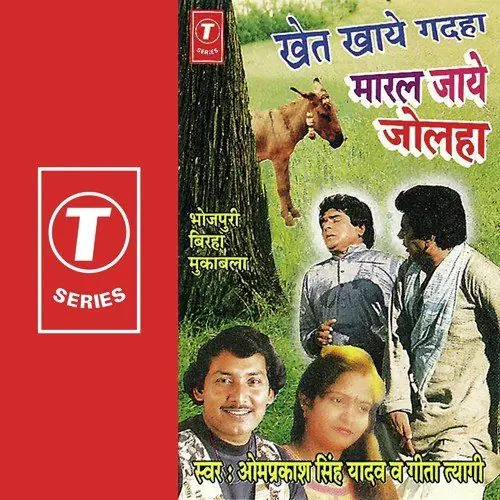
1. "Khet khae Gadaha, Maral jaae jolha"
- Donkey eats through the field, but the owner gets beaten.
Can easily help explain Attribution Bias if provided context around it.
2. "भूखे भजन ना होइहें गोपाला, लेलीं आपन कंठी-माला "
Is a beautiful opener to explain Maslow's hierarchy.
I know it is a stretch to say they're saying exactly what's written in the academic papers, and that is not what I'm aiming for either.
The point is, ever since the advent of civilization, people have constantly tried to understand others, the biases, the fallacies, the social truths, and the nudges.
It has been expressed in different vocabularies, through idioms, through children's story books, through epics.
- Step 1 is not feeling superior because we know a bunch of cool words and a list of biases.
- Step 2 is democratizing what we know further by finding ways in which people from different cultures, regionalities, and cognitive affordances understand, most intuitively, what the field has to offer.
How does it help?
Imagine creating a vaccine promotion training programme for Asha workers, and one module needs them to understand Status Quo Bias and resistance from older people in the community.
"बुढ़ सुगा पोस ना मानेला" does the job far more efficiently than 4 hours of a workshop on it which will overwhelm them.
I think Bhojpuri BeSci can be a thing, - as can it be in Marathi, Gujrati, Hindi, Punjabi, Urdu, Dutch, Spanish- and so on.
What do you think?